A hectare is 10,000 m². This is how big.
A hectare is 10,000 m², a 100×100 metre square (about 2.47 acres or 1.4 football fields). Draw it to scale on a real map and compare 1, 100 or 1000 hectares with your own city.
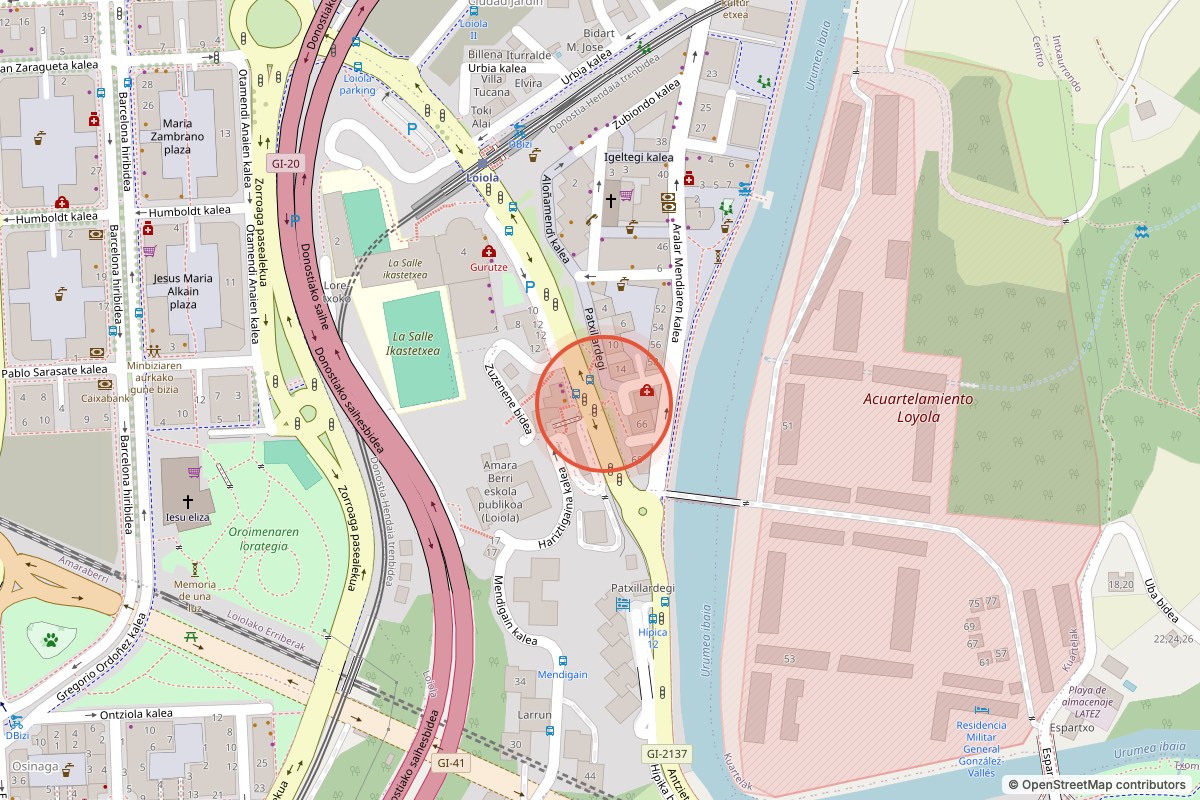
1 hectare in familiar things
Hectares
A hectare (ha) is the area of a square 100 metres on each side, that is, 10,000 square metres. It is the unit used to measure land, farms, fields or the area burned by a wildfire. The trouble is that "10,000 m²" is a hard figure to picture, and that is why the Hectareometer exists: it draws on a real map how much any number of hectares covers, over a place you know. Drag the map above to your city and change the number of hectares to see it to scale.
How big is a hectare, visually?
A hectare is roughly the size of a city block, or a bit more than a football pitch (and about 2.47 acres). But our eyes are bad at comparing areas: the best way to grasp it is to see it drawn over somewhere you know. Use the tool above, type the number of hectares and drag the map to your neighbourhood.
Hectare conversions
| 1 hectare equals | Value |
|---|---|
| Square metres | 10,000 m² |
| Square kilometres | 0.01 km² |
| Acres | ≈ 2.47 acres |
| Ares | 100 a |
| Square side | 100 × 100 m |
| Football fields | ≈ 1.4 pitches |
How many football fields is a hectare?
About 1.4 football fields. A standard pitch measures roughly 105 × 68 metres (about 7,140 m²), that is around 0.7 hectares. The phrase "a hectare is like a football pitch" is very common in the news, but it is inaccurate: it makes areas (and wildfires) look bigger than they are. When people say "300 football fields burned down", it is really about 210 hectares, not 300.
Other tools
Not just areas: we also measure, convert and draw distances, water and weights to scale.
Examples: how big are…?
Common quantities, ready to see drawn to scale:
Articles
Stories about hard-to-picture quantities, with the figure drawn to scale.
Frequently asked questions about the hectare
- How big is a hectare?
- A hectare (ha) is the area of a square 100 metres on each side, that is, 10,000 square metres (0.01 km²). It equals 100 ares, or about 2.47 acres.
- How many square metres are in a hectare?
- A hectare is exactly 10,000 square metres (100 m × 100 m), roughly 107,639 square feet.
- How many acres are in a hectare?
- One hectare is about 2.47 acres. Conversely, one acre is about 0.405 hectares.
- How many football fields is a hectare?
- About 1.4 football fields. A standard pitch measures roughly 105 × 68 metres (about 7,140 m²), that is around 0.7 hectares. The "one hectare = one football pitch" comparison is common but inaccurate.
- How big is a hectare, visually?
- The best way to picture it is to draw it on a real map, over a place you know. In the Hectareometer you can enter any number of hectares and an area is drawn to scale on the map.
- Where do area units come from?
- Almost every traditional land unit measured work: the acre was the land a team of oxen could plough in a day, and the Spanish fanega the land sown with a fanega of grain. The hectare is the exception: the metric system created it in 1795 as a 100 × 100 metre square. The whole story is in the area units.
Why was the Hectareometer built?
"An area equivalent to 300 football fields has burned down." We have all heard a sentence like that, but can we really picture how much 300 football pitches cover? One summer day I heard it on the radio and ended up reading this article (in Spanish), which explains nicely that a football pitch and a hectare are a poor analogy. I like data visualisation, so I thought about how to make the size of a wildfire easier to understand. The Hectareometer was the best I came up with.
The underlying idea is to compare by analogy: if I know something with a given property, comparing something else to it helps me understand it. Saying "it is like 8,163 football stadiums" does not help; saying "it is the size of this city" does, but only if you live there. Hence the spark: what if I could draw the area of the hectares I want to understand on top of a place I know? That is how the Hectareometer was born.